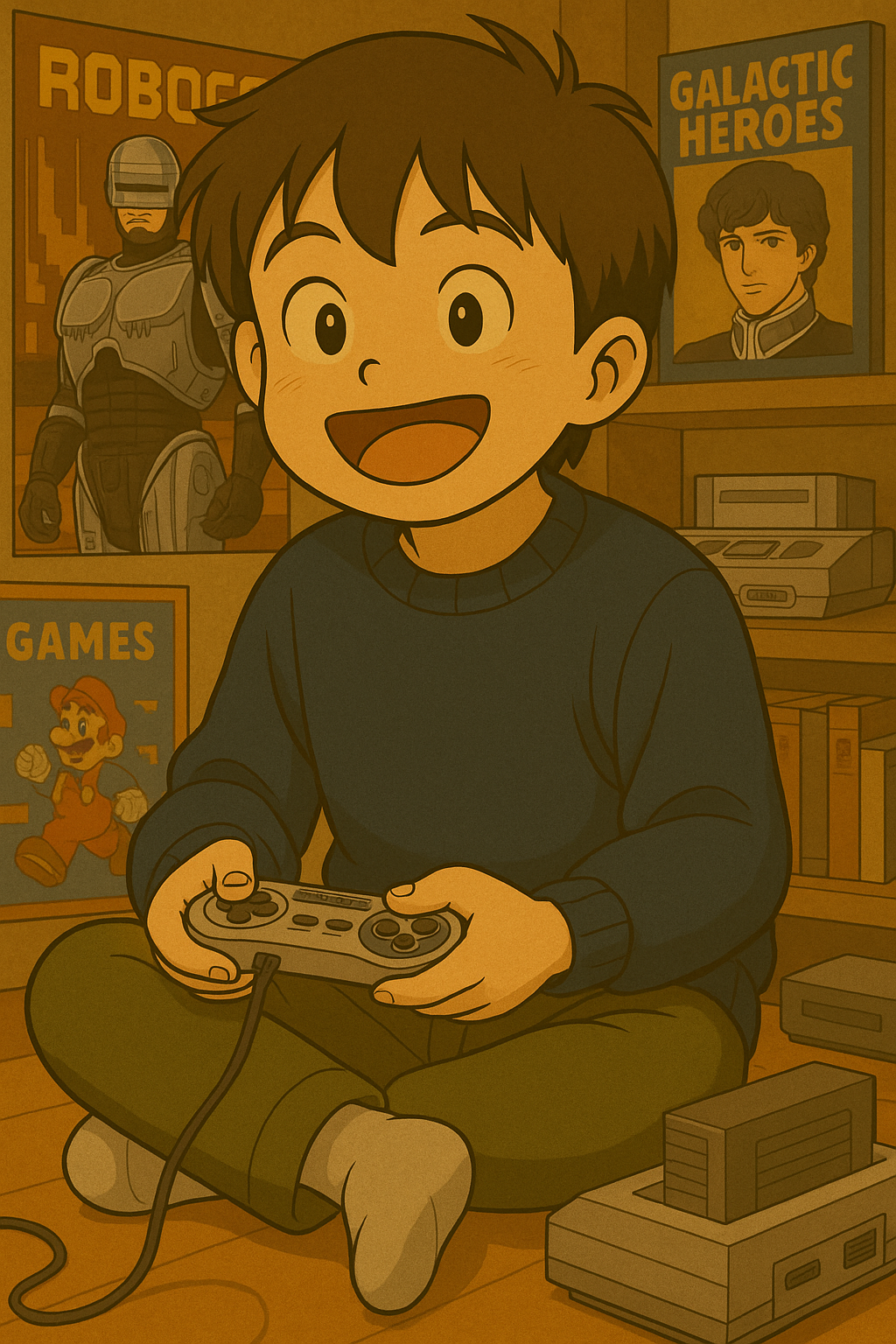
Introduction: Rebuilding an Industry from the Ashes
In October 1985, the North American video game landscape was in ruins. Following the catastrophic video game crash of 1983—fueled by an oversaturation of low-quality software and consumer distrust—retailers across the United States were refusing to stock video game consoles. To the American public, home consoles were a dying fad.
Nintendo of America, led by Minoru Arakawa, faced a monumental challenge. To convince skeptical North American retailers to give gaming a second chance, Nintendo completely repackaged its Japanese Family Computer (Famicom) into a sleek, VCR-styled home system: the Nintendo Entertainment System (NES).
To launch the console in its test market of New York City in October 1985, Nintendo released a carefully curated lineup of 18 launch titles. Known among retro collectors today as the iconic “Black Box Games” due to their uniform black packaging and pixel-art box covers, these games laid the foundation for modern interactive entertainment.
Here is a deep dive into the historic games that launched alongside the NES and single-handedly saved the video game industry.
1. The Flagship Masterpiece: Super Mario Bros.
No discussion of the NES launch lineup is complete without mentioning the title that redefined game design forever: Super Mario Bros.
+--------------------------------------------------------------------------+
| SUPER MARIO BROS. (1985)                                                 |
| Developer / Publisher: Nintendo EAD                                      |
| Key Innovation: Smooth horizontal scrolling, precise momentum physics,   |
| secret warp zones, dynamic power-up progression (Mushroom/Fire Flower).  |
+--------------------------------------------------------------------------+
Why It Changed Everything
Before Super Mario Bros., most home arcade games took place on single, static screens. Shigeru Miyamoto and Takashi Tezuka designed a sprawling, multi-world adventure that gave players a true sense of journey and momentum.
With its iconic theme song composed by Koji Kondo, tight jumping mechanics, secret hidden blocks, and flawless level progression, Super Mario Bros. did not just sell NES consoles—it established the blueprint for the 2D platforming genre for decades to come.
2. The Peripheral Revolution: Duck Hunt and Gyromite
To bypass retailer skepticism in 1985, Nintendo marketed the NES not as a “video game console,” but as an interactive “toy system.” This strategy relied heavily on unique hardware accessories bundled with launch titles.
Duck Hunt (The NES Zapper Light Gun)
Bundled with the NES Action Set, Duck Hunt utilized the revolutionary NES Zapper light gun. Players aimed at their CRT television screens to shoot flying ducks and clay pigeons while an infamous hunting dog giggled at missed targets.
- Technical Wizardry: When the trigger was pulled, the NES flashed a black screen for a fraction of a second with a white box over the duck target. The Zapper’s internal light sensor detected whether it was aimed at the light box, registering a hit instantaneously.
Gyromite (R.O.B. the Robotic Operating Buddy)
To convince toy store buyers, Nintendo created R.O.B. (Robotic Operating Buddy), a physical toy robot that responded to optical flashes on the TV screen. Gyromite required R.O.B. to physically lift and drop spinning gyroscopes onto buttons to open color-coded gates for the player on-screen. While slow, R.O.B. succeeded in getting the NES onto toy store shelves nationwide.
3. High-Velocity Arcade Classics: Excitebike and Kung Fu
Nintendo understood that North American gamers loved the fast-paced action of local arcades. Two key launch titles brought intense arcade thrills directly into the living room.
Excitebike
Designed by Shigeru Miyamoto, Excitebike delivered high-octane dirt bike racing complete with heat-management mechanics, ramp jumps, and land-deformation physics.
- Design Innovation: It was one of the earliest home console games to feature a Design Mode, allowing players to build and race on their own custom motocross tracks.
Kung Fu (Kung-Fu Master)
A licensed port of Irem’s hit arcade beat-’em-up, Kung Fu placed players in the shoes of Thomas as he fought his way up five martial-arts-infused floors of the Devil’s Temple to rescue his kidnapped girlfriend, Sylvia. Its responsive punch-and-kick mechanics set the stage for future side-scrolling beat-’em-ups like Double Dragon and Final Fight.
4. The Complete 1985 North American NES Launch Lineup
The full launch suite comprised 18 distinct titles spanning sports, arcade action, strategy, and light-gun shooters. This diversity proved to American families that the NES had something for everyone.
| Game Title | Genre | Primary Feature / Legacy |
| Super Mario Bros. | Platformer | Definitive 2D platforming masterpiece |
| Duck Hunt | Light Gun Shooter | Utilized the iconic NES Zapper |
| Excitebike | Racing | Featured custom track editor physics |
| Kung Fu | Beat ‘Em Up / Action | Arcade-accurate martial arts action |
| Gyromite | Puzzle / Peripheral | Controlled via R.O.B. the Robot |
| Stack-Up | Puzzle / Peripheral | Secondary R.O.B. block-stacking game |
| Ice Climber | Vertical Platformer | Co-op vertical climbing gameplay |
| Mach Rider | Sci-Fi Racing | Post-apocalyptic motorcycle combat |
| Wild Gunman | Light Gun Shooter | Fast-draw Western duel mechanics |
| Hogan’s Alley | Light Gun Shooter | Tactical target shooting simulation |
| 10-Yard Fight | Sports | Early American football simulation |
| Baseball | Sports | Classic 9-inning arcade baseball |
| Golf | Sports | Introduced the two-click swing meter |
| Tennis | Sports | Singles and doubles court action |
| Soccer | Sports | Fast-paced 5-on-5 arcade soccer |
| Pinball | Arcade / Sports | Multi-table pinball simulation |
| Wrecking Crew | Action / Puzzle | Destruction puzzle game starring Mario |
| Clu Clu Land | Arcade / Puzzle | Unique pole-swinging maze game |
5. The “Black Box” Design & The Seal of Quality
For modern retro game collectors, the original 18 launch titles hold immense aesthetic and monetary value due to two crucial features introduced during this launch era:
Pixel-Art Packaging
Unlike the exaggerated, deceptive cover art found on Atari 2600 boxes, Nintendo adopted a minimalist black grid packaging design. The box art featured actual pixelated sprite art taken directly from the game. What you saw on the box was exactly what appeared on your television screen—restoring transparency and trust to consumers.
The Nintendo Seal of Quality
To ensure the market would never again be flooded with broken, unplayable games, Nintendo instituted a strict licensing framework stamped with the gold “Official Nintendo Seal of Quality.” This seal guaranteed that the cartridge was fully tested, licensed, and manufactured to Nintendo’s rigorous hardware standards.
Conclusion: The Legacy of October 1985
The October 1985 launch of the Nintendo Entertainment System was far more than a simple product release; it was a miraculous rescue mission for an entire entertainment medium.
Armed with a diverse 18-game lineup, innovative peripherals like the Zapper and R.O.B., honest packaging, and the unprecedented genius of Super Mario Bros., Nintendo proved that home gaming was not a temporary fad, but an enduring cultural movement.
For collectors, historians, and gamers today, revisiting these 18 “Black Box” classics offers a fascinating glimpse into the precise moment modern video gaming was born.
Frequently Asked Questions (FAQ)
Q1: What is the rarest or most expensive NES launch title today?
In complete-in-box (CIB) condition, early “Hangtab” variants of Super Mario Bros., Gyromite, and Stack-Up are among the most valuable NES games in history, regularly fetching thousands of dollars at auction.
Q2: Were all 18 launch games available nationwide in 1985?
No. The initial October 1985 release was a limited test market launch restricted to the Greater New York City area. Following its massive success, Nintendo expanded distribution to Los Angeles and other major cities in early 1986, followed by a full nationwide North American release in September 1986.
Join the Discussion
Which of the original 18 NES launch games did you play first? Do you still own any original “Black Box” cartridges in your collection? Share your memories and thoughts in the comments section below!