[태그:] Handheld Console

  • The Day the World Changed: Remembering the Mind-Blowing Debut of the Original Game Boy

    T

    There is a distinct nostalgia that only kids of the late ’80s and early ’90s will truly understand. It was the era of CRT televisions, wired controllers, and being tethered to a living room carpet if you wanted to play video games.

    Then, in 1989, Nintendo dropped a chunky, grey brick into our hands—and suddenly, the universe expanded.

    The original Nintendo Game Boy (DMG-01) wasn’t just a new gadget; it was a cultural shift. Looking back today, it’s hard to fathom how a tiny olive-green monochrome screen could captivate an entire generation. But at the time, it felt like absolute magic.

    The Unforgettable Ritual: 4 AA Batteries and Pure Freedom

    Before the Game Boy, gaming was strictly an indoor activity. You had to ask permission to use the family TV, hook up the NES, and stay within six feet of the console.

    The Game Boy shattered those boundaries. The magic started with a simple, incredibly satisfying ritual:

    1. Sliding open the heavy battery door on the back.
    2. Snapping in four AA batteries (and praying they were fresh Duracells).
    3. Sliding the heavy power switch on top, hearing that legendary “Ba-ding!” as the Nintendo logo descended down the screen.

    Suddenly, you weren’t trapped in your living room anymore. You were playing Super Mario Land on the school bus, in the backseat of a family station wagon during endless road trips, or sitting outside on the front porch under the summer sun.

    Super Mario and Tetris in the Palm of Your Hand

    The pack-in game, Tetris, along with Super Mario Land, redefined what a portable experience could be.

    Hearing that iconic Soviet-inspired Tetris chiptune blasting from the tiny, tinny mono speaker felt surreal. You weren’t playing a dumbed-down LCD game like the Game & Watch; you were playing a full-fledged video game with tight controls, endless replayability, and soundtrack tunes that stay stuck in our heads three decades later.

    Super Mario Land proved that an entire platforming kingdom could fit inside your pocket. Guiding Mario past crumbling blocks and flying enemies while sitting in a dentist’s waiting room felt like living in the future.

    How Did We Play for Hours on That Blurry Screen?

    If you hand an original Game Boy to a kid today, their first reaction is usually confusion:

    “Where is the backlight? Why is everything green? How can you even see this?”

    Let’s be honest: by modern standards, that original STN LCD screen was brutal. There was no built-in backlight. If you moved the console too fast, the pixels left a blurry ghost trail across the screen.

    So how on earth did we spend 4 to 5 hours straight staring at that tiny, contrast-deprived display without our eyes falling out?

    1. The Art of “Light Hunting”

    We became experts in physics and light angles without realizing it. We constantly tilted the Game Boy toward streetlamps, bedroom nightlights, or sunlight streaming through the car window. Remember those ridiculous clip-on magnifying glasses with built-in lights (like the Worm Light or Light Boy)? They were clunky, but they were our lifesavers.

    2. Pure, Unadulterated Imagination

    Back then, graphics weren’t expected to look like real life. Our brains easily filled in the gaps. A few dark green pixels were a fully realized Goomba; a crude square was a falling Tetromino block. The immersion came from the gameplay loop, not the resolution.

    3. The Novelty of Portability Overrode Everything

    The sheer shock of having interactive entertainment on the go was so powerful that eye strain simply didn’t matter. The temporary headache was a small price to pay for gaming absolute freedom.

    A Timeless Icon of Gaming History

    Today’s portable consoles—like the Nintendo Switch or Steam Deck—boast OLED screens, 4K dockability, and graphics that rival cinema. Yet, none of them will ever match the sheer seismic impact of the original Game Boy.

    It transformed video games from a home pastime into a lifestyle. It proved that great games don’t need millions of colors or backlit displays—they just need great design, a couple of buttons, and four reliable AA batteries.

    To anyone who survived the non-backlit screen era: we were true pioneers.

  • Ugh… Should I Just Burn a PTO Day?

    Hello, this is Super Asurada 77.

    I’m just a middle-aged guy surviving the daily grind by recharging my batteries with retro games.

    The very first thought that hits me the moment I open my eyes in the morning is: “I don’t feel so great… Should I just call out sick today?”

    But contrary to my mind, my body is already on autopilot—showering and eating breakfast.

    Next thing I know, I’m surrendering myself to the subway, clutching a retro handheld console in both hands.

    I’m right back at that boss battle I was stuck on yesterday.

    My soul is still at home, but I can see my physical shell sitting in the office chair, staring daggers at the monitor.

    Staring at the screen, the thought creeps in again.

    “Maybe I should take a half-day this afternoon?”

    But then reality hits. I have a client meeting with the director later…

    There goes my afternoon off, flying far away~

    Still, lunchtime arrives. Seeing the hot soup and the meat dish in the cafeteria…

    My HP gauge starts to rise. Lunch fills my HP to the max, but my magic gauge—MP—needs a different fuel: vending machine coffee.

    A fresh shot of caffeine fills my MP bar completely.

    Time flies, and suddenly, it’s already time to clock out.

    On the subway ride home, I ponder again.

    “Should I take tomorrow off?”

    Ah… We have a production deployment tomorrow afternoon…

    Taking tomorrow off is out of the question~!!!

    Dang it~!!! I guess I’ll just rest during the weekend~~!!

    Original article in Korean: [link]

  • Your Childhood Wish Has Already Come True

    Hello, this is SuperAsurada77.

    Back in my middle and high school days, my friends always had the high-end gear: the Sega Genesis, Super Nintendo (SNES), TurboDuo, and the Neo Geo.

    At my house, we had the trusty 8-bit NES. It was a powerful machine in its own right, but I couldn’t help but feel envious of my friends.

    I remember the visual shock of seeing the protagonist transform into a wolf in Altered Beast on the TurboGrafx-16. I was floored by the fact that you could play Fatal Fury 2 and Art of Fighting 2 right in your living room with the Neo Geo. I gasped in awe at the intensity of Goku’s special moves in Dragon Ball Z: Super Butōden on the SNES. And the flashy animations on the TurboDuo? They blew my mind—I couldn’t tell if I was watching an anime or playing a game. It was pure chaos in the best way possible.

    I used to save up my allowance to buy gaming magazines, playing the games in my imagination just by staring at the screenshots. Sadly, all those magazines I collected vanished somewhere along the way—lost while I was away for military service. But they remain precious memories to me.

    I remember making a vow to myself while playing Art of Fighting 2 at the arcade. “Just wait! When I grow up and make my own money, I’m going to buy every single 16-bit console and arcade game out there.” That was my wish.

    Time flew by like an arrow. We shifted from the analog age to the digital era. I went from a student to a middle-aged man. I’ve built a family, I’m raising kids, and I’m busy living in the present. But sometimes, the nostalgia hits, and memories of those games suddenly come rushing back.

    And then, I remembered that old wish.

    Wait… realized that my wish actually did come true! Haha.

    Whether it’s during my commute or lying in bed after tucking the kids in, this handheld retro game console in my hands is exactly what I wished for.

    Inside this tiny portable device lives every console my friends had and all those games I wanted. I can pull it out and play whenever I want! My dream really became reality.

    I guess I should thank my younger self for making that wish.

    Hey, kid… thank you!!!

    Original article in Korean: [link]

  • The Reality of a Middle-Aged Retro Gamer’s Commute Home

    Hello, this is SuperAsurada77.

    The commute home after a long, grinding day at work.

    Unless you’re lucky enough to live right next to a subway station, most of us have to transfer from the train to a bus to get home.

    Technically, I could walk the 20 to 30 minutes from the station to my house. But let’s be real—after surviving the daily grind, my energy bar is completely empty. So, I have no choice but to rely on the bus to save my legs.

    However, these buses are notorious for their unpredictable schedules depending on traffic.

    The interval is supposed to be 15 minutes, but when things go wrong, that gap can stretch to 30 or even 40 minutes.

    Usually, I’d be fuming, but with zero stamina left, I just stand there and wait, resigned to my fate.

    seeing “Next Bus: 28 Minutes” on the display board would normally make my blood boil.

    But for a middle-aged retro gamer, the situation is completely reversed.

    The moment I pull my retro handheld out of my bag and click the power button…

    Right there, the bus stop transforms into my childhood bedroom. I’m instantly on a trip down memory lane.

    This isn’t just a game console; it’s a time machine.

    28 minutes until arrival? That’s plenty of time.

    I can clear a few stages in Super Mario or play a quick match of Winning Eleven. Before I know it, the time has flown by.

    For those 28 minutes, I’m back to being a kid.

    As long as I have my retro console, even the waiting becomes part of the fun.

    Retro gaming! For us middle-aged gamers, it’s not just a hobby—it’s our daily vitamin and therapy.

    Original article in Korean: [link]

  • Is the Retroid Pocket 5 the King of Android Handhelds?

    Hey everyone, it’s SuperAsurada77.

    Today, let’s talk about the Retroid Pocket 5, currently available from Retroid.

    This is an Android-based gaming handheld. Usually, when you game on a standard smartphone, heat buildup leads to thermal throttling, causing frame rate drops and lag. However, the Retroid Pocket 5 features an active cooling fan on the back. Even when things heat up, the fan keeps the device cool, meaning you’ll experience almost zero throttling.

    It’s an Android device truly optimized for gaming, running on Android 13 out of the box.

    Connectivity: Looking at the bottom, there’s a slot for a Micro SD card. It supports both a standard 3.5mm headphone jack and USB-C audio, so you have plenty of options for sound.

    Controls: The L2 and R2 triggers are analog, allowing for precise pressure control—a huge plus for racing games.

    However, since the analog stick is positioned quite close to the D-pad, there is a little bit of thumb interference when playing action games, though it’s not a dealbreaker.

    Cooling & Ergonomics: You can actually see the fan through the back panel. It stays quiet most of the time, but once you fire up heavy 3D games, the smart fan kicks in to dissipate the heat.

    The grips are ergonomically designed and feel decent in the hand, though I wouldn’t say they are the most comfortable I’ve ever used.

    Specs & Weight: Weighing in at 282g (under the 300g mark), it has the perfect heft for portability.

    The processor is a Snapdragon 865—the same chip found in the Samsung Galaxy S20. This means it can handle PS2 games at 2x resolution without breaking a sweat.

    Performance Test: Nightshade (Kunoichi) First up is the PS2 classic, Nightshade (known as Kunoichi in Asia). This title stuttered a bit on the Retroid Pocket 4 Pro, but on the Pocket 5, it runs flawlessly at 2x resolution. I set the graphics backend to Vulkan for this one.

    Performance Test: Onimusha 2 Onimusha 2 also runs great at 2x resolution. However, a quick tip: if you use OpenGL, the character models might turn invisible. Make sure to select Vulkan to fix this glitch.

    Performance Test: Soulcalibur II Soulcalibur II had some minor stuttering on the RP4 Pro at 2x resolution, but here on the Pocket 5? It’s buttery smooth.

    Performance Test: Soulcalibur III Soulcalibur III also runs perfectly at 2x resolution.

    Performance Test: Tekken 5 Tekken 5 handles 2x resolution with no issues.

    Performance Test: Virtua Fighter 4 Virtua Fighter 4 is solid at 2x resolution.

    Performance Test: WWE SmackDown! Here Comes the Pain WWE Here Comes the Pain also runs great at 2x resolution.

    Screen, Battery & Verdict: Needless to say, PSP games run effortlessly—even God of War runs well at 4x resolution.

    The bezels are thin, and since it’s an OLED panel, the true blacks are incredible. When playing 4:3 content, the letterboxing blends perfectly with the bezels, creating the illusion that you’re playing on a native 4:3 device.

    Since it’s Android, you can install Netflix and YouTube. You can also listen to music via Bluetooth headphones while gaming. It’s the size of a standard phone, making it the perfect companion for your subway or bus commute.

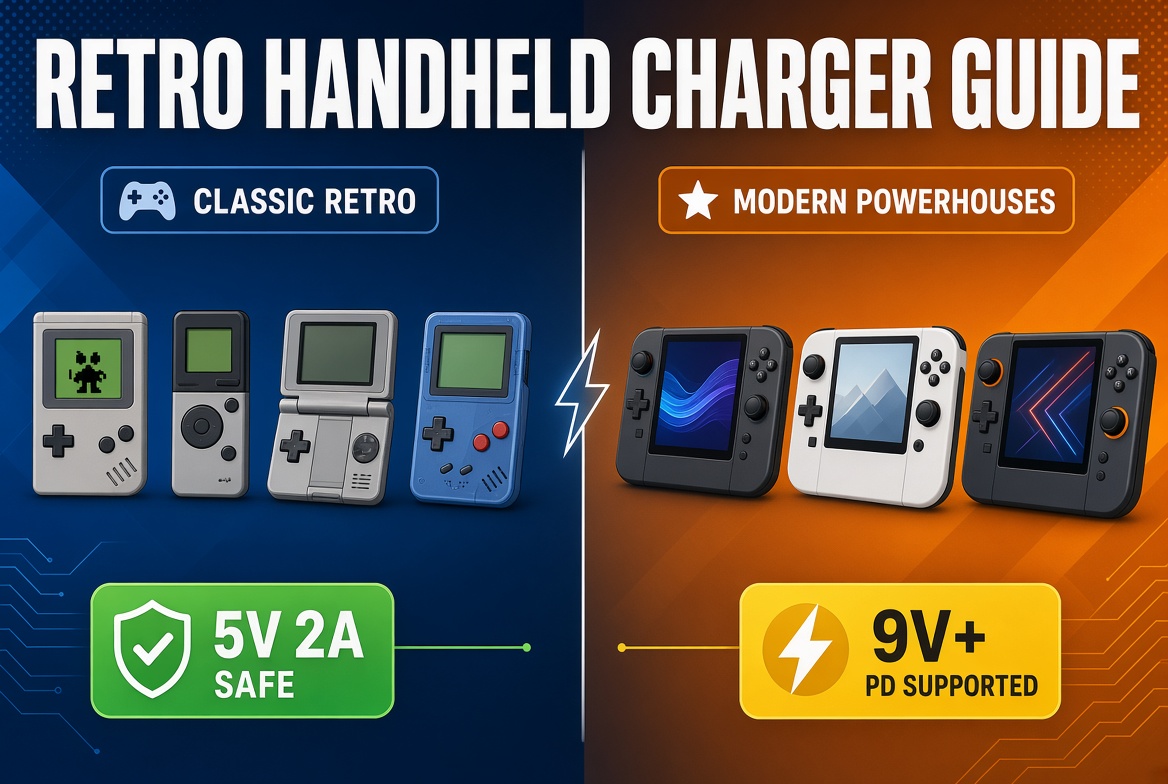
    Important Charging Warning: Unlike budget retro handhelds where high-voltage chargers can fry the motherboard, the Retroid Pocket 5 actually requires a charger that supports 9V or higher (PD charging) for fast and stable charging. If you try to use an old 5.1V charger, you risk overheating the charger itself.

    Battery Life: The efficiency is impressive. I played Super Robot Wars Impact (PS2) for about an hour and a half, and it only drained about 10% battery. Also, while the RP4 Pro used to get warm, the RP5 stays incredibly cool. I really love this aspect of the device.

    Conclusion: All things considered, the Retroid Pocket 5 is the best retro handheld I’ve played so far. The only downside? The price. It’s a bit steep (over $200 USD).

    I’m already looking forward to Retroid’s next product. Please, Retroid, give us a 4-inch+ device with a native 4:3 screen next time!

    Note on Setup: Keep in mind that Android handhelds don’t come with emulators pre-installed. There is a stock launcher, but I barely use it.

    https://blog.naver.com/superasrada77/223371973989

    Outro: Please refer to my other blog posts for guides on setting up RetroArch and other frontends to get your library organized.

    Happy retro gaming, everyone!

    Original article in Korean: [link]