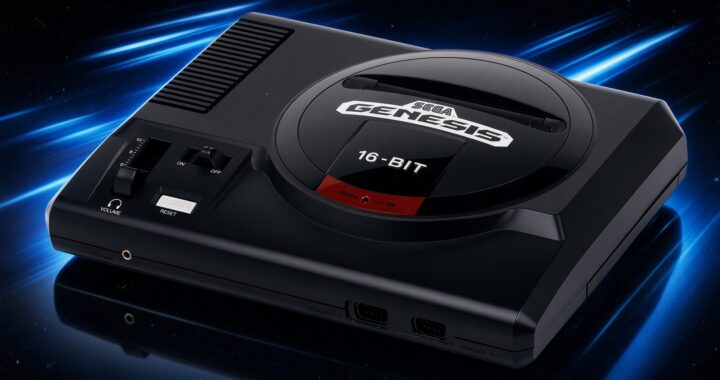
[태그:] Motorola 68000 CPU

  • Sega Genesis vs. SNES: CPU Clock Speeds, Blitter Math, and the Genre Divide

    Introduction: The Architectural Divide of the 16-Bit Era

    The console war between the Sega Genesis (known as the Mega Drive outside North America) and the Super Nintendo Entertainment System (SNES) defines the golden age of 16-bit video gaming.

    In the early-to-mid 1990s, gamers passionately debated which system reigned supreme. Sega touted its aggressive marketing campaign fueled by “Blast Processing,” while Nintendo countered with colorful graphics, rich sound sampling, and vast, story-driven worlds.

    However, beneath the flashy marketing lay a fundamental technical reality: hardware architecture directly shaped software genres.

    Due to contrasting CPU speeds, RAM bandwidth, and graphical processing chips, developer hardware limitations naturally steered each console toward distinct game genres. Sega’s fast processor made the Genesis the ultimate platform for high-velocity shoot-’em-ups (shmups) and twitch action games, whereas the SNES’s color depth and audio capabilities laid the perfect foundation for cinematic Japanese Role-Playing Games (JRPGs).

    Here is a technical and historical breakdown of why speed defined the Genesis, while depth defined the Super Nintendo.

    1. The Need for Speed: Why the Sega Genesis Mastered Fast Shooters

    To understand why fast-paced vertical and horizontal shooters thrived on the Sega Genesis, one must look closely at its central processing unit (CPU).

    +------------------------------------------------------------------------+
    | SEGA GENESIS CPU: Motorola 68000 @ ~7.67 MHz                           |
    | Strengths: High raw clock speed, rapid sprite math, fast instruction   |
    | Best For: Dozens of moving projectiles, zero sprite flicker, fast scrolling |
    +------------------------------------------------------------------------+
    
    +------------------------------------------------------------------------+
    | SNES CPU: Ricoh 5A22 @ ~3.58 MHz                                       |
    | Strengths: Hardware Mode 7 scaling/rotation, rich color palette        |
    | Limitations: Slower processing frequency, prone to slowdown in shmups  |
    +------------------------------------------------------------------------+
    

    The Power of the Motorola 68000

    Launched in North America in 1989, the Sega Genesis was built around the formidable Motorola 68000 CPU, running at an impressive clock frequency of 7.67 MHz.

    This high clock frequency provided exceptional processing bandwidth for sprite calculations, collision physics, and rapid background scrolling routines:

    • High-Density Bullet Hell: Games could throw dozens of enemy sprites, bullets, and explosions on screen simultaneously without dropping frame rates.
    • Twitch Action & Blast Processing: The CPU handled rapid screen updates easily, allowing games like Sonic the Hedgehog and Rocket Knight Adventures to maintain blinding momentum.

    The Golden Age of Genesis Shooters

    Arcade developers like Treasure, Konami, and Techno Soft recognized the raw horsepower of the Genesis. The console became the premier home destination for intense, high-velocity shoot-’em-ups:

    • Thunder Force IV (Lightening Force): Celebrated for its sprawling multi-directional parallax scrolling, massive screen-filling bosses, and blistering particle effects with virtually zero slowdown.
    • Musha: Delivered relentless bullet-hell patterns and lightning-fast vertical scrolling that arcade purists adored.
    • Alien Soldier & Gunstar Heroes: Pushed sprite limits to the extreme, displaying massive, multi-jointed bosses moving at breakneck speed.

    2. The Bottleneck: Why the Stock SNES Struggled with Velocity

    When Nintendo launched the SNES in North America in 1991, it outpaced the Genesis in color capability (displaying 256 colors simultaneously out of a 32,768 palette) and digital audio sampling. However, its primary processor—the Ricoh 5A22 CPU—ran at a maximum clock speed of just 3.58 MHz (and dropped down to 2.68 MHz or 1.79 MHz when accessing slower ROM buses).

    The “Slowdown” Phenomenon in Early SNES Shooters

    Because the SNES CPU ran at less than half the clock frequency of the Genesis, early port efforts of arcade shooters ran into severe performance walls. When dozens of sprites flooded the screen, the system encountered heavy frame rate drops, commonly referred to by gamers as “slowdown.”

    • Gradius III (1991): While visually stunning with vibrant colors, the game suffered from notorious frame drops during frantic battle sequences where the CPU simply could not process sprite collisions quickly enough.
    • Super R-Type (1991): Feature-rich in visual detail, yet heavily hampered by persistent lag during complex boss encounters.

    While developers later mastered hardware tricks—and eventually embedded external coprocessors like the SA-1 chip into cartridges to boost CPU speeds to 10.74 MHz—the stock SNES architecture was inherently less suited for pure, unadulterated velocity out of the box.

    3. The RPG Fortress: How SNES Features Inspired Epic Storytelling

    While the SNES faced challenges with high-speed twitch shooters, its hardware architecture was custom-tailored for a completely different genre: sprawling, cinematic Role-Playing Games.

    Rather than relying on raw CPU clock cycles, RPGs require rich visual environments, expressive character sprites, and emotionally resonant orchestral music to immerse players in grand narratives.

    +-------------------------------------------------------------------------+
    | WHY THE SNES WAS THE UNDISPUTED KING OF JRPGs                           |
    |                                                                         |
    |  1. 256-Color Palette     -> Richer world environments & character art|
    |  2. Sony SPC700 Audio     -> Orchestral, sampled instrument tracks     |
    |  3. Mode 7 Graphics       -> Dynamic 3D world maps and flight scenes   |
    |  4. Battery-Backed SRAM   -> Massive 40+ hour quest saves               |
    +-------------------------------------------------------------------------+
    

    1. Rich Color Depth and Mode 7 Perspective

    The SNES’s vast color palette allowed artists to paint detailed dungeons, lush forests, and evocative townscapes with intricate shading. Furthermore, the console’s hardware-level Mode 7 feature allowed developers to create pseudo-3D rotating world maps (such as flying airships over vast continents), adding a sense of scale that 16-bit gamers had never experienced before.

    2. The Sony SPC700 Sound Chip

    Designed by Ken Kutaragi (who would later design the PlayStation), the SNES’s 8-channel SPC700 audio chip utilized ADPCM sound samples. Instead of the sharp, metallic FM synthesis of the Genesis YM2612, the SNES produced warm, realistic strings, flutes, and percussion, giving games unforgettable orchestral scores.

    The Legendary SNES RPG Library

    Square, Enix, and Nintendo turned the SNES into an iconic haven for fantasy and science-fiction narratives:

    • Chrono Trigger: Utilized the console’s color palette, fluid character animations, and sample-based soundtrack to deliver one of the greatest time-travel epics in gaming history.
    • Final Fantasy VI (Final Fantasy III in North America): Leveraged Mode 7 airship sequences, deep color shading, and legendary orchestral compositions to tell a mature, opera-level narrative.
    • EarthBound & Super Mario RPG: Used specialized hardware mapping to construct vibrant, memorable worlds packed with personality.

    4. Genre Comparison Matrix: Genesis vs. SNES

    To see how these hardware trade-offs translated into everyday library strengths, consider this side-by-side comparison:

    Feature / MetricSega Genesis / Mega DriveSuper Nintendo (SNES)
    Main CPU Speed~7.67 MHz (Motorola 68000)~3.58 MHz (Ricoh 5A22)
    Simultaneous Colors64 Colors (from 512 palette)256 Colors (from 32,768 palette)
    Primary Genre StrengthHigh-Speed Shooters, Action, SportsJRPGs, Platformers, Action-Adventures
    Audio AestheticGritty, Aggressive FM SynthWarm, Sampled Orchestral Instruments
    Iconic Shmup TitlesThunder Force IV, Musha, TruxtonSpace Megaforce, Axelay
    Iconic RPG TitlesPhantasy Star IV, Shining Force IIChrono Trigger, Final Fantasy VI

    Conclusion: Two Consoles, Two Distinct Gaming Legacies

    The stark contrast between the Sega Genesis and Super Nintendo libraries was not an accident; it was the direct outcome of hardware engineering choices made in the late 1980s.

    Sega prioritized raw CPU clock speed and rapid sprite throughput, creating an arcade-at-home machine that excelled at adrenaline-pumping shooters, high-velocity platformers, and fast action. Nintendo prioritized color depth, advanced graphical effects, and rich audio sampling, creating a canvas perfectly suited for atmospheric storytelling, immersive world-building, and epic RPG sagas.

    For retro gamers and collectors today, this technical divide is a blessing. It means owning both consoles offers two completely different, non-overlapping windows into the brilliant creativity of the 16-bit era.

    Frequently Asked Questions (FAQ)

    Q1: Did the Sega Genesis have any great RPGs?

    Absolutely! While less numerous than on the SNES, the Genesis features timeless RPG classics such as Phantasy Star IV, Shining Force II, and Warsong.

    Q2: Are there any smooth, fast shooters on the SNES?

    Yes. Later in the SNES lifespan, developers mastered the hardware. Games like Space Megaforce (Super Aleste) and Axelay proved that with clever programming, the SNES could run impressive shooters with minimal lag.

    Join the Discussion

    Which side of the 16-bit aisle did you land on back in the day? Did you prefer the high-speed shooter action of the Genesis, or did you spend hundreds of hours exploring SNES RPG worlds? Share your favorite memories in the comments below!