[태그:] Neo Geo price

  • The Legendary Neo Geo AES: Launch Price, Pack-In Games, and Early vs. Later Model Differences

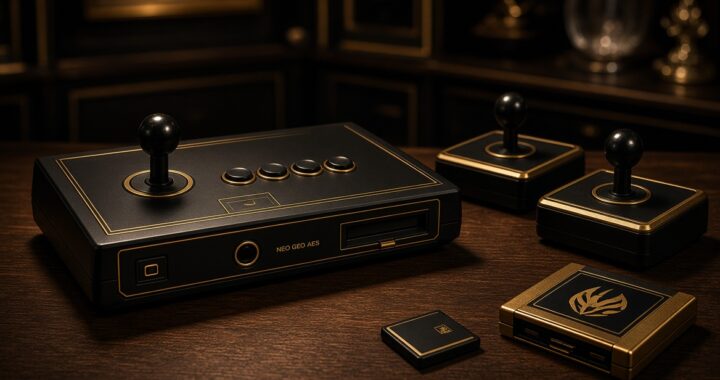
    When SNK launched the Neo Geo AES (Advanced Entertainment System) in the early 1990s, it wasn’t just another home console. It was an arcade machine for your living room — the same hardware that powered SNK’s Multi Video System (MVS) cabinets. For American gamers who could afford it, the Neo Geo delivered true arcade-perfect gameplay at a time when most home systems were still making compromises.

    Launch Price: The Most Expensive Console of Its Era

    In North America, the Neo Geo AES officially went on sale on July 1, 1991. SNK positioned it as a premium product from day one.

    The flagship package was known as the Gold System, which retailed for $649.99. That price included:

    • The console itself
    • Two large arcade-style joystick controllers
    • A memory card
    • One pack-in game

    A more affordable Silver System was also offered at $399.99. It came with only one controller and no pack-in game.

    Individual game cartridges launched at around $200 and quickly climbed higher — some titles eventually sold for $300–$600 new. Adjusted for inflation, the Gold System’s $650 price tag equals well over $1,500 in today’s money. This made the Neo Geo the most expensive home console ever released at the time and limited its audience to serious enthusiasts and collectors.

    Games Released Alongside the Console

    The Neo Geo’s early software library was small but high-quality. Several titles that had already proven themselves in arcades (or were developed simultaneously for both MVS and AES) arrived near the console’s retail launch.

    Key early titles associated with the system’s debut period include:

    • Magician Lord — Frequently cited as the most common pack-in game for the Gold System in the U.S. (early boxes even carried a gold sticker highlighting its inclusion). A colorful side-scrolling action-platformer that showcased the system’s graphics and sound.
    • NAM-1975 — A run-and-gun shooter set during the Vietnam War era.
    • Baseball Stars Professional — A sports title that was originally planned as a possible pack-in option.
    • Top Player’s Golf
    • Riding Hero
    • Cyber-Lip
    • The Super Spy
    • Ninja Combat

    These games demonstrated what the Neo Geo could do that other 16-bit systems of the era could not: large, colorful sprites, smooth animation, and arcade-accurate sound. Because the AES used the exact same hardware as the MVS arcade boards, there was no “porting” quality loss — what you played at home was identical to the coin-op version.

    Early vs. Later Neo Geo AES Models: What’s the Difference?

    Although the Neo Geo AES hardware remained functionally the same throughout its life (1990–1997), SNK made several revisions over the years. Collectors and enthusiasts often distinguish between early and later models based on these changes.

    1. Power Supply and Power Consumption

    • Early models used a DC 5V power adapter and consumed around 8 watts.
    • Later revisions switched to a DC 9V adapter and dropped power consumption to approximately 5 watts. This is one of the most reliable ways to identify the era of a console.

    2. Motherboard Revisions SNK produced multiple motherboard revisions (commonly referred to by collectors as AES3-1 through AES3-6 and similar designations).

    • Very early boards sometimes included additional daughterboards to improve video output clarity.
    • Mid-period revisions (particularly 3-3 and 3-4) had cost-cutting changes that removed certain capacitors from the audio circuit. This resulted in slightly degraded or unbalanced sound on some units. Later revisions (3-5 and beyond) restored the missing components.
    • Overall video quality and RGB output can vary slightly between revisions, which is why many collectors prefer later boards or perform simple capacitor fixes on earlier ones.

    3. Cartridge Capacity Support The original system specification advertised “Max 330 Mega.” As games grew larger later in the system’s life, SNK introduced bank-switching techniques that allowed cartridges up to 716 megabits. Later consoles handled these larger “Giga Power” cartridges without issue, while the hardware itself remained compatible with all earlier titles.

    4. Cosmetic and Packaging Differences Early U.S. units were often sold in the Gold System packaging with the distinctive gold sticker. Later production runs and regional variations showed minor changes in labeling, box art, and included accessories. A limited gold-colored console was also produced in small numbers (primarily for the Japanese market).

    In practical terms, every official Neo Geo AES can play the entire library. The differences are mostly about build quality, power efficiency, audio fidelity on certain revisions, and long-term reliability. Many modern collectors prefer later revisions for their refined audio circuits and lower power draw.

    Why the Neo Geo Still Matters

    The Neo Geo AES never competed on volume with the Super Nintendo or Sega Genesis. Its high price kept it in a niche. Yet that same exclusivity helped create one of the most respected and collectible libraries in retro gaming. Titles such as Fatal Fury, Art of Fighting, Samurai Shodown, and later Metal Slug and The King of Fighters series turned the system into a legend.

    For American retro gaming fans today, original AES hardware remains the purest way to experience these games without emulation. Understanding the launch price, the early software lineup, and the subtle differences between early and later models helps collectors make informed decisions and appreciate just how ambitious SNK’s vision was in 1991.

    Whether you’re hunting for a clean later-revision console or simply want to know why a 30-year-old system still commands respect, the Neo Geo AES stands as a high-water mark of arcade-to-home translation.