[태그:] Retro Nintendo Collecting

  • 32-Bit Power in Your Pocket: The Historic North American GBA Launch Titles

    Introduction: The Dawn of 32-Bit Handheld Gaming

    On June 11, 2001, Nintendo revolutionized portable entertainment once again with the North American release of the Game Boy Advance (GBA).

    Following the massive success of the original 8-bit Game Boy and Game Boy Color, the GBA represented a massive technological leap forward. Powered by a 32-bit ARM7TDMI RISC processor running at 16.78 MHz, the wide-screen landscape handheld brought SNES-level—and in many cases, early 32-bit console level—graphical capabilities directly into the palms of players’ hands.

    Boasting a reflective TFT color screen capable of displaying 32,768 colors, multi-channel digital audio, and backward compatibility with the entire Game Boy library, the GBA was an immediate commercial juggernaut.

    To launch the system in North America, Nintendo and its third-party partners debuted an ambitious 17-game launch lineup.

    From remastered 16-bit classics to intense gothic action and high-speed Mode 7-style racing, these titles proved that handheld gaming had reached true console-quality maturity. Here is your ultimate guide to the standout games that launched the Game Boy Advance.

    1. The Headliner: Super Mario Advance

    Leading Nintendo’s first-party launch suite was Super Mario Advance, a comprehensive 32-bit enhancement of the classic Super Mario Bros. 2 (originally released on the NES).

    +--------------------------------------------------------------------------+
    | SUPER MARIO ADVANCE (2001)                                               |
    | Developer / Publisher: Nintendo R&D2 / Nintendo                          |
    | Key Features: Digitized voice acting, enlarged boss sprites,             |
    | score tracking, bundled with classic arcade Mario Bros. multiplayer.     |
    +--------------------------------------------------------------------------+
    

    Why It Showcased the Hardware

    Super Mario Advance was far more than a simple port. Nintendo utilized the GBA’s 32-bit architecture to add massive multi-jointed boss sprites, vibrant background layers, and clear, digitized character voice clips for Mario, Luigi, Toad, and Princess Peach.

    Additionally, every Super Mario Advance cartridge included an updated four-player Link Cable version of the original 1983 arcade classic Mario Bros., establishing the GBA as a premier local multiplayer platform right out of the gate.

    2. High-Octane Mode 7 Racing: F-Zero: Maximum Velocity

    If Super Mario Advance provided familiar platforming comfort, F-Zero: Maximum Velocity flexed the raw mathematical processing power of the GBA’s ARM7 processor.

    Acting as a direct spiritual successor to the legendary 1991 SNES launch title, Maximum Velocity brought futuristic 400+ km/h hover-car racing back into the spotlight:

    • Mode 7 Style Rotation: The GBA hardware easily executed real-time track rotation, scaling, and perspective math without needing extra coprocessors inside the cartridge.
    • Single-Cartridge Multiplayer: Utilizing the new GBA Link Cable, up to four players could race against each other using a single game cartridge, streaming game data to connected GBA systems in seconds.

    3. Dark Gothic Masterpiece: Castlevania: Circle of the Moon

    For hardcore gamers seeking deep, challenging gameplay, Konami’s Castlevania: Circle of the Moon was widely considered the standout critical masterpiece of the North American GBA launch.

    +-------------------------------------------------------------------------+
    | CASTLEVANIA: CIRCLE OF THE MOON (2001)                                  |
    | Developer / Publisher: Konami                                           |
    | Key Mechanics: Dual Set-up System (DSS) card combinations,               |
    | sprawling Metroidvania exploration, soaring orchestral chiptune soundtrack.|
    +-------------------------------------------------------------------------+
    

    The Metroidvania Renaissance

    Following in the footsteps of Castlevania: Symphony of the Night, Circle of the Moon put players in control of vampire hunter Nathan Graves as he explored Dracula’s sprawling, non-linear castle.

    • The DSS Card System: Players combined Action Cards and Attribute Cards dropped by enemies to unlock over 100 unique magic attacks, elemental whips, and stat boosts.
    • Orchestral Audio Quality: Konami exploited the GBA’s sound channels to deliver rich, acoustic-heavy arrangements of classic Castlevania themes that stunned reviewers in 2001.

    4. Third-Party Excellence: Rayman and Tony Hawk’s Pro Skater 2

    The North American GBA launch was celebrated for its exceptionally strong third-party support, proving that non-Nintendo developers could thrive on the 32-bit handheld.

    Rayman (Ubi Soft)

    Ubi Soft brought a near-arcade-perfect port of the original PC/PlayStation platformer Rayman to the small screen. Featuring luscious pastel color palettes, fluid hand-drawn character animations, and tight hitboxes, it demonstrated the system’s ability to render complex 2D sprite art.

    Tony Hawk’s Pro Skater 2 (Vicarious Visions)

    Perhaps the most technically impressive engineering feat of the entire launch was Vicarious Visions’ port of Tony Hawk’s Pro Skater 2. Instead of attempting a weak 3D approximation, the developers constructed an isometric 3D engine that allowed players to perform full trick combos, vert grinds, and flips across sprawling skateparks with fluid frame rates.

    5. Overview: The Full June 2001 North American GBA Launch Library

    The June 11, 2001 launch suite comprised 17 total titles, offering an unprecedented variety of genres on day one:

    Game TitleGenreDeveloper / PublisherKey Highlight
    Super Mario AdvancePlatformerNintendoEnhanced 32-bit remake with digitized voices
    F-Zero: Maximum VelocityFuturistic RacingNd Cube / NintendoSingle-cartridge 4-player Link Cable racing
    Castlevania: Circle of the MoonAction RPGKonamiAcclaimed non-linear “Metroidvania” exploration
    Rayman2D PlatformerUbi SoftArcade-quality color palette and hand-drawn sprites
    Tony Hawk’s Pro Skater 2Sports / ActionVicarious Visions / ActivisionGroundbreaking isometric 3D skate park engine
    ChuChu Rocket!Puzzle / StrategySonic Team / SegaSega’s historic debut title on Nintendo hardware
    Earthworm JimAction PlatformerShiny / InterplayClassic 16-bit cartoon action port
    GT Advance Championship RacingRacing SimulationTHQDetailed car tuning and real-world track physics
    Konami Krazy RacersKart RacingKonamiFun mascot kart racer featuring Konami characters
    Namco MuseumArcade CollectionNamcoClassic arcade ports (Pac-Man, Galaga, Dig Dug)
    Ready 2 Rumble Boxing: Round 2SportsMidwayFast-paced 3D-style arcade boxing
    Iridion 3DSci-Fi ShooterShin’en / MajescoPre-rendered pseudo-3D space shooter graphics
    Fire Pro WrestlingSports SimulationSpike / BAM!Deep technical Japanese wrestling simulation
    Pinball Challenge DeluxeArcade PuzzleEmpire InteractiveMulti-table pinball simulation
    Army Men: AdvanceTop-Down Action3DOTactical plastic soldier combat
    Pitfall: The Mayan AdventureAction PlatformerActivisionUpdated port of the classic 16-bit jungle runner
    Top Gear GT RallyRacingKemcoOff-road rally racing with dynamic weather

    The Legacy of the GBA Launch

    The June 2001 launch of the Game Boy Advance marked the official beginning of the “32-bit 2D Golden Age.”

    By marrying the portability of the Game Boy lineage with internal architecture capable of matching—and exceeding—the SNES and Sega Genesis, Nintendo created a sanctuary for high-quality 2D game design at a time when home consoles (like the PlayStation 2 and Nintendo GameCube) were shifting entirely toward early 3D polygons.

    For retro game collectors and hardware historians today, exploring the GBA launch lineup reveals a golden era where tight controls, expressive pixel art, and innovative hardware design converged into portable perfection.

    Frequently Asked Questions (FAQ)

    Q1: Did the original Game Boy Advance have a backlit screen?

    No. The original 2001 GBA (model AGB-001) used a reflective TFT screen requiring direct ambient light. Nintendo later released the backlit Game Boy Advance SP (model AGS-101) in 2003 to solve this visibility challenge.

    Q2: Could the GBA play original Game Boy cartridges?

    Yes! The GBA included a physical hardware switch inside the cartridge slot and a secondary Z80 coprocessor, ensuring 100% backward compatibility with original Game Boy and Game Boy Color games.

    Join the Discussion

    Which of the 17 North American GBA launch games did you pop into your console first back in June 2001? Did you spend more late nights exploring Castlevania or racing in F-Zero? Share your memories in the comments below!

  • The 16-Bit Counterattack: Introducing the Historic SNES Launch Titles

    Introduction: The Arrival of Nintendo’s 16-Bit Powerhouse

    In August 1991, the North American home video game market was at a critical turning point. Sega had gained immense momentum with its aggressive “Blast Processing” campaigns, positioning the Sega Genesis as the edgy, high-speed alternative to the aging 8-bit NES.

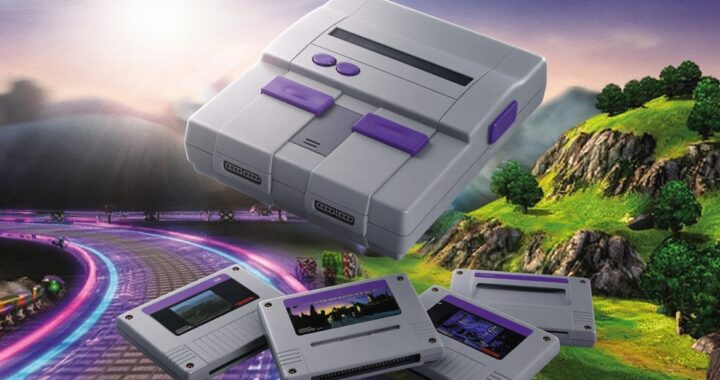
    Nintendo, however, was preparing its ultimate response. On August 23, 1991, Nintendo officially launched the Super Nintendo Entertainment System (SNES) in North America.

    Where Sega emphasized raw CPU clock frequency, Nintendo constructed a hardware architecture built for unmatched visual depth and rich audio synthesis. Boasting a 32,768-color palette (with up to 256 colors on screen simultaneously), hardware-level sprite scaling and rotation (known as Mode 7), and an 8-channel Sony audio chip, the SNES brought unprecedented cinematic polish into living rooms.

    To demonstrate this technological leap, Nintendo released the SNES alongside five legendary launch titles.

    From defining 2D platforming perfection to pioneering 3D perspective racing, these games proved that the 16-bit era had truly arrived. Here is your ultimate guide to the games that launched the Super Nintendo.

    1. The Crown Jewel: Super Mario World

    Leading the SNES launch as the official pack-in title bundled with the console was Super Mario World, designed by Shigeru Miyamoto and Takashi Tezuka.

    +--------------------------------------------------------------------------+
    | SUPER MARIO WORLD (1991)                                                 |
    | Genre: 2D Side-Scrolling Platformer                                      |
    | Key Innovations: World Map secret exits, introduction of Yoshi,          |
    | multi-layered background parallax, dynamic camera scaling and spin-jumps.|
    +--------------------------------------------------------------------------+
    

    Why It Redefined Platforming Again

    Following the groundbreaking success of Super Mario Bros. 3 on the NES, Super Mario World took full advantage of the SNES’s expanded memory and color depth.

    The game introduced Yoshi, Mario’s dinosaur companion, who brought unique mechanics like swallowing enemies, spitting fireballs, and granting specialized flight abilities depending on the color of shell he consumed.

    With 96 exits scattered across Dinosaur Land, vibrant background art, and Koji Kondo’s dynamic, multi-instrumental soundtrack, Super Mario World set a gold standard for level design that remains influential to this day.

    2. Speed and Mode 7 Mastery: F-Zero

    If Super Mario World showcased color depth and gameplay mechanics, F-Zero was designed to flex the raw graphic processing muscle of the SNES hardware.

    The Mode 7 Revolution

    Before 3D graphics cards existed in home consoles, F-Zero introduced players to Mode 7—a hardware feature that allowed a flat 2D background layer to be scaled, rotated, and tilted in real-time.

    By flattening a high-resolution racetrack map onto the screen and rotating it beneath the player’s hovering vehicle, F-Zero simulated a pseudo-3D perspective at blistering speeds.

    • Futuristic High-Speed Racing: Set in the year 2560, players piloted hover-cars like the Blue Falcon across lethal plasma-track courses at speeds exceeding 400 km/h.
    • Chiptune Masterclass: The game’s energetic electronic soundtrack (featuring legendary tracks like Mute City and Big Blue) highlighted the rich basslines and synthesizer capabilities of the SNES audio chip.

    3. Atmospheric Action: Super Castlevania IV

    Konami’s Castlevania series was already a household name on the 8-bit NES, but Super Castlevania IV leveraged the 16-bit hardware to transform the franchise into an atmospheric gothic masterpiece.

    +-------------------------------------------------------------------------+
    | SUPER CASTLEVANIA IV (1991)                                             |
    | Feature 1: 8-Directional Whip Control & Swinging Physics                |
    | Feature 2: Rotating Mode 7 room environments and background scaling     |
    | Feature 3: Orchestral ADPCM audio with dynamic ambient echo effects     |
    +-------------------------------------------------------------------------+
    

    Reimagining Simon Belmont’s Quest

    Super Castlevania IV was more than a sequel; it was a complete technological reimagining of Simon Belmont’s crusade against Dracula.

    • Whip Physics: Players could now swing their whip in eight distinct directions, block incoming enemy projectiles, and hook onto ceiling rings to swing across chasms.
    • Visual Spectacle: Level 4-2 famously featured an entire room that rotated 360 degrees in the background using Mode 7 processing while Simon swung from a central ring, mesmerizing gamers in 1991.

    4. High-Altitude Flight: Pilotwings

    Co-developed by Nintendo EAD, Pilotwings served as a technical showcase for the SNES’s rotation, scaling, and vector math capabilities.

    Acting as a flight simulation training academy, players completed challenges in hang gliding, skydiving, rocket belting, and biplane flight.

    • Depth Perception via Scaling: As players plummeted toward target landing pads during skydiving missions, the island terrain scaled smoothly toward the camera, demonstrating the console’s ability to calculate dynamic scale and perspective without frame drops.

    5. Tactical Sci-Fi Strategy: Gradius III

    Rounding out the North American launch lineup was Konami’s iconic space shooter, Gradius III.

    A direct port of the demanding arcade game, Gradius III allowed players to customize their ship’s weapon loadout (the Vic Viper) with specialized laser beams, shields, and option pods.

    • Arcade Visuals at Home: The game displayed massive boss alien battles and multi-layered starfield parallax scrolling.
    • Historical Context: While early levels suffered from hardware slowdown when dozens of enemy projectiles flooded the screen, Gradius III proved that complex arcade shoot-’em-ups could be played in living rooms without sacrificing graphic detail.

    6. Summary Matrix: The 1991 North American SNES Launch Lineup

    Game TitleGenreDeveloper / PublisherKey Technical Feature / Legacy
    Super Mario World2D PlatformerNintendo EAD / NintendoOfficial pack-in game; introduced Yoshi and 96 exits
    F-ZeroFuturistic RacerNintendo EAD / NintendoShowcased Mode 7 pseudo-3D racetrack rotation
    Super Castlevania IVAction PlatformerKonami8-way whip mechanics and rotating Mode 7 rooms
    PilotwingsFlight SimulatorNintendo EAD / NintendoFlight physics and smooth terrain sprite scaling
    Gradius IIIShoot ‘Em UpKonamiMassive arcade boss sprites and custom weapon loadouts

    Conclusion: The Legacy of August 1991

    While five games may seem like a modest launch selection, Nintendo prioritized uncompromising quality over quantity.

    Each title in the August 1991 launch lineup had a specific purpose: Super Mario World guaranteed unmatched gameplay depth, F-Zero and Pilotwings showcased revolutionary Mode 7 graphics processing, Super Castlevania IV demonstrated atmospheric 16-bit audio, and Gradius III delivered hardcore arcade thrills.

    This small but potent library successfully ignited the SNES era, laying the groundwork for a platform that would go on to host some of the greatest video games ever made.

    Frequently Asked Questions (FAQ)

    Q1: Was Legend of Zelda: A Link to the Past an SNES launch title in North America?

    No. While A Link to the Past launched in Japan in November 1991, the North American version was not released until April 1992.

    Q2: Did all 5 launch titles come bundled with the console?

    No. Only Super Mario World was included as a pack-in game with the standard SNES console set in August 1991. The remaining four titles had to be purchased separately at retail.

    Join the Discussion

    Which of the five original North American SNES launch titles did you play first? Do you still remember seeing F-Zero’s Mode 7 graphics for the first time? Share your nostalgic memories in the comments below!