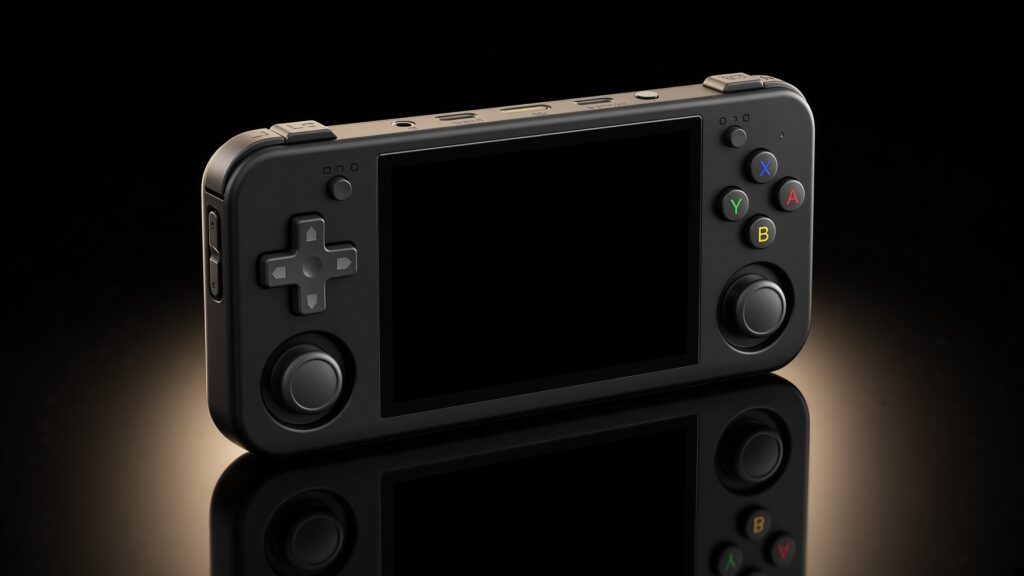
Anbernic RG35XX H Review in 2026 – Is This 3.5-Inch Retro Handheld Still Worth It?
By Super Asurada 77 | Retro Joy Lab
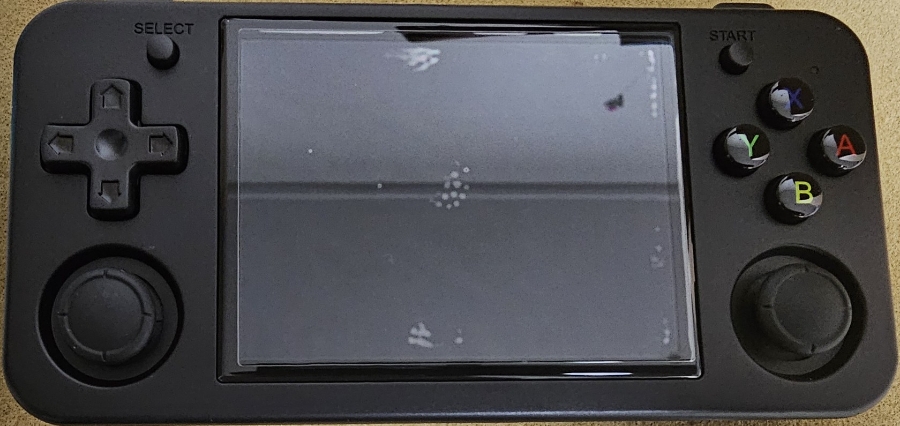
There are more retro handhelds available today than ever before.
Some have larger screens. Some use much faster processors. Others can emulate newer systems that small budget handhelds could only dream about a few years ago.
And yet, I still find myself picking up the Anbernic RG35XX H.
Why?
Because sometimes I don’t need the most powerful handheld.
I just want something small, light, comfortable, and powerful enough to play the retro games I actually enjoy.
For me, those games are mostly from the Famicom, Super Famicom, Mega Drive, PC Engine, Game Boy Advance, and PlayStation era.
The RG35XX H fits that role surprisingly well.
After using larger handhelds such as the Odin 2, I realized that portability and comfort can matter just as much as performance.
So, is the RG35XX H still worth buying in 2026?
Let’s take another look.
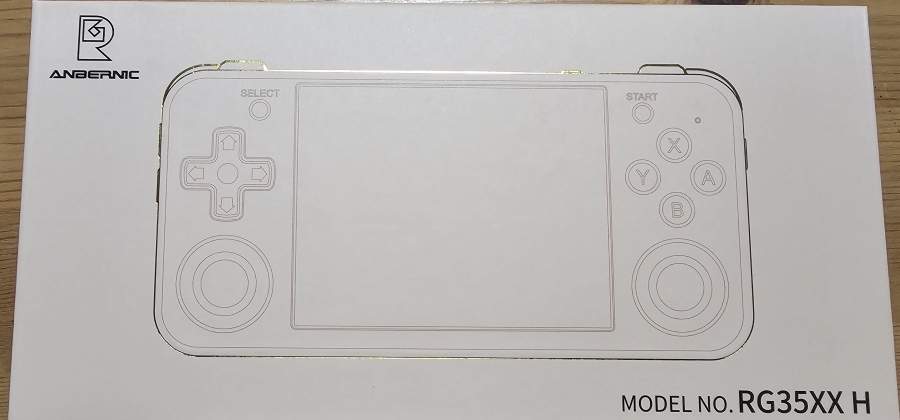
Why I Bought the RG35XX H
Before buying the RG35XX H, I was using an Odin 2.
The Odin 2 is a fantastic handheld with far more performance than the RG35XX H.
But there was one problem.
It was simply more handheld than I needed for the games I was playing.
I mainly spent my time with older systems such as Famicom, Mega Drive, GBA, PC Engine, and PlayStation.
For these systems, the Odin 2’s performance was almost excessive.
More importantly, its larger body and 400g-class weight became noticeable during longer gaming sessions.
After playing for a while, my wrists would sometimes feel tired.
That made me start looking for something much lighter.
I compared several affordable retro handhelds, including the RK2023, XU10, R36S, and RG35XX H.
Eventually, I chose the RG35XX H.
The reason was simple.
It gave me the combination I wanted: a horizontal design, stereo speakers, analog sticks, vibration support, a classic 4:3 display, and a very lightweight body.
For PlayStation and earlier systems, that sounded almost perfect.
RG35XX H Specifications
The RG35XX H is based on Anbernic’s H700 platform.
| Specification | RG35XX H |
|---|---|
| Display | 3.5-inch IPS, OCA laminated |
| Resolution | 640 × 480 |
| Aspect Ratio | 4:3 |
| CPU | Allwinner H700 Quad-Core Cortex-A53 |
| CPU Speed | Up to 1.5GHz |
| GPU | Dual-Core Mali-G31 MP2 |
| RAM | 1GB |
| Operating System | Linux |
| Storage | MicroSD / TF card |
| Card Slots | Dual MicroSD |
| Maximum Expansion | Up to 512GB |
| Wi-Fi | 2.4GHz / 5GHz |
| Bluetooth | Bluetooth 4.2 |
| Battery | 3300mAh |
| Charging | 5V / 1.5A |
| Video Output | HDMI output |
| Other Features | Vibration, wireless controller support |
| Weight | Approximately 180g |
| Dimensions | 14.5 × 6.9 × 1.6cm |
On paper, these specifications are nothing extraordinary in 2026.
But specifications don’t tell the whole story.
The real strength of the RG35XX H is how well all of these components work together for classic gaming.
The 180g Weight Makes a Bigger Difference Than Expected
This is probably my favorite feature of the RG35XX H.
It weighs approximately 180 grams.
That may not sound important until you compare it with a larger handheld.
With something like an Odin 2, you are holding more than twice that weight.
For short gaming sessions, that doesn’t matter much.
But after 30 minutes or an hour, the difference becomes obvious.
The RG35XX H almost disappears in your hands.
I can play an RPG, strategy game, or old-school arcade title for a long time without feeling like I am holding a small tablet.
It is also much easier to carry.
You can put it into a small bag and barely notice the additional weight.
For commuting, waiting for a bus, or playing during a short break, this kind of portability matters more to me than benchmark scores.
3.5-Inch 4:3 Display
The RG35XX H uses a 3.5-inch 640×480 IPS display.
For classic consoles, this resolution works very well.
Systems such as Famicom, Super Famicom, Mega Drive, PC Engine, Neo Geo, and PlayStation look natural on a 4:3 screen.
You don’t get the large black borders often seen when playing 4:3 games on modern widescreen handhelds.
Colors are good, viewing angles are wide, and pixel-art games look sharp.
However, there is one obvious disadvantage.
The screen is small.
When I first bought the RG35XX H, I didn’t consider 3.5 inches particularly small.
After spending more time with 4-inch and larger handhelds, my opinion changed.
Small text in RPGs and strategy games can become tiring during longer sessions.
For quick arcade games, platformers, fighting games, and action games, I still think 3.5 inches is perfectly usable.
But if your eyes prefer larger text these days, the RG40XX H is noticeably easier to look at.
That extra half inch makes more difference than the numbers suggest.
Controls and Button Feel
The controls are another area where the RG35XX H performs well.
The D-pad has enough resistance to feel controlled without becoming uncomfortable.
I tested fighting games such as Street Fighter II and had no major problems performing directional commands.
Of course, when I miss a Shoryuken these days, I’m not sure I can blame the D-pad anymore.
The ABXY buttons also feel responsive.
They are not overly soft and don’t require excessive force.
R1, R2, L1, and L2 use a clickier style of button.
They work well, although people who prefer completely silent controls may find the shoulder buttons slightly louder than the face buttons.
There are also two analog sticks with L3 and R3 functionality.
For Famicom and Super Famicom games, I rarely use them.
But they become useful for PlayStation, Dreamcast, N64, and some ported games.
One small issue is that the left analog stick sits fairly close to the D-pad.
Depending on how you hold the device, your thumb can occasionally touch the stick while using the D-pad.
It isn’t a deal breaker, but it is something I noticed during longer sessions.
Stereo Speakers and Earphones
The RG35XX H includes stereo speakers.
Don’t expect smartphone or premium handheld audio quality.
There isn’t much bass, and the speakers aren’t especially powerful.
But for retro games, they do the job.
Sound effects are clear enough, music is easy to hear, and I haven’t experienced serious distortion at normal listening volumes.
I also tested the 3.5mm headphone jack.
Some inexpensive retro handhelds behave strangely with four-pole earphones that include a microphone.
You may hear missing channels, muffled audio, or an unbalanced sound.
On my RG35XX H, both standard earphones and earphones with an integrated microphone worked normally.
For playing on public transportation, I usually prefer earphones anyway.
Operating System
The RG35XX H runs a Linux-based operating system.
The stock Anbernic firmware is functional and relatively simple to understand.
You can browse systems, select games, and start playing without spending hours configuring everything.
That is important because not everyone buying a retro handheld wants to turn firmware installation into a weekend project.
The RG35XX H also has a large enthusiast community, and several alternative firmware options have appeared over the device’s lifetime.
Alternative firmware can improve the interface, emulator configuration, game organization, and customization options.
However, stock firmware is still perfectly usable if your goal is simply to play games.
For new users, I recommend learning the device with the standard operating system first before experimenting with other firmware.
Famicom, Super Famicom and Mega Drive Performance
This is where the RG35XX H feels completely at home.
Famicom and NES games run extremely well.
Super Famicom titles are also an excellent match for the hardware.
Mega Drive and Genesis games work very well, too.
For these older 8-bit and 16-bit systems, the H700 processor has more than enough performance.
Input response feels good, games start quickly, and the 4:3 display fits these systems nicely.
If most of your retro library comes from the 1980s and 1990s, you don’t need an expensive high-performance Android handheld.
The RG35XX H already does the job.
Game Boy Advance Performance
GBA performance is also excellent.
Games run smoothly, and the 3.5-inch IPS panel produces a clean image.
The screen ratio is not identical to the original Game Boy Advance, so some scaling or borders are necessary depending on your settings.
Even so, I enjoy playing GBA games on the RG35XX H.
The lightweight body is especially useful for long RPG sessions.
Games such as strategy RPGs and classic JRPGs feel very comfortable on this device.
PlayStation Performance
PlayStation is one of the main reasons I originally chose the RG35XX H.
For PS1 emulation, the H700 chipset is generally more than sufficient.
Most of the PlayStation games I play run very well.
The device also includes vibration support, which was important to me.
When I was comparing cheap handhelds, this became one of the features that pushed me toward the RG35XX H.
Vibration isn’t necessary for every game.
But for PlayStation titles designed around DualShock feedback, I like having it available.
For me, PS1 is one of the RG35XX H’s strongest systems.
If your library mainly consists of PS1 games and older consoles, this device provides a very good balance between performance, size, and battery life.
Dreamcast Performance
Dreamcast is where expectations need to become more realistic.
The RG35XX H can emulate Dreamcast games, but that doesn’t mean every Dreamcast game will run perfectly.
Performance depends heavily on the title and emulator configuration.
Some lighter games are surprisingly playable.
I have had good results with games such as Soulcalibur.
More demanding titles can show frame drops, audio problems, or other performance issues.
I treat Dreamcast support as a bonus rather than the main reason to buy the device.
If Dreamcast is one of your primary systems, I would choose a more powerful handheld.
Nintendo 64 Performance
Nintendo 64 is similar.
Many games will boot and some titles can be enjoyable.
But compatibility and performance vary significantly between games.
You may need to change emulators, cores, graphics settings, or frame-skip options.
For casual experimentation, N64 support is nice to have.
For someone building a handheld specifically for Nintendo 64, the RG35XX H would not be my first choice.
PSP Performance
PSP is probably the easiest system to misunderstand when looking at the RG35XX H specification sheet.
Yes, PSP emulation is supported.
But the RG35XX H is not a PSP replacement.
Some 2D and less demanding titles can run surprisingly well.
For example, games such as Super Robot Wars A Portable are much easier for this type of hardware than demanding 3D PSP games.
More demanding titles will require compromises and may still struggle.
There is another problem.
The PSP originally used a 16:9 display.
The RG35XX H uses a 4:3 display.
That means PSP games appear relatively small when displayed at their correct aspect ratio.
PSP support is useful, but I see it as an extra feature rather than a major selling point.
Battery Life
The RG35XX H uses a 3300mAh battery.
Anbernic advertises up to around eight hours of battery life.
Actual runtime depends on screen brightness, Wi-Fi usage, emulator load, volume, and the system being emulated.
Older systems naturally require less processing power than Dreamcast or PSP.
For the kind of retro games I normally play, the battery has been more than sufficient for commuting and casual gaming.
I rarely find myself worrying about battery life during a normal day.
Charging
One correction I wanted to make from my original review concerns charging.
Anbernic officially specifies 5V / 1.5A charging for the RG35XX H.
The safest approach is to follow the manufacturer’s charging specification and use a compatible USB power source and cable.
I generally prefer simple, low-power USB charging for inexpensive retro handhelds rather than treating them like modern fast-charging smartphones.
RG35XX H vs RG40XX H
This is probably the most important comparison in 2026.
The RG35XX H and RG40XX H are very similar internally.
Both use the H700 family of hardware and target roughly the same group of emulated systems.
The biggest difference is obvious.
The RG35XX H has a 3.5-inch display, while the RG40XX H increases that to 4 inches.
That half-inch difference sounds minor.
In actual use, it isn’t.
Text is easier to read on the RG40XX H, RPGs are more comfortable, and longer gaming sessions put less strain on my eyes.
However, the RG35XX H remains smaller and lighter.
That’s why I don’t think one completely replaces the other.
If portability is the priority, I prefer the RG35XX H.
If screen comfort is more important, I prefer the RG40XX H.
[Internal Link: Read my Anbernic RG40XX H Review]
What I Like About the RG35XX H
What keeps bringing me back to this handheld is the combination of size and simplicity.
It is extremely light.
The 4:3 screen is ideal for many classic systems.
PS1 and older consoles run very well.
The controls are comfortable.
It includes analog sticks, vibration, stereo speakers, Wi-Fi, Bluetooth, HDMI output, and dual MicroSD card slots.
None of those features are individually revolutionary.
Together, however, they create a very practical retro handheld.
What I Don’t Like
The biggest weakness is the screen size.
A 3.5-inch display is portable, but it can feel small in text-heavy games.
Dreamcast, Nintendo 64, and PSP performance is also inconsistent.
Those systems should be considered bonus platforms rather than the RG35XX H’s main purpose.
The analog sticks are useful but sit fairly close to the D-pad.
And while the stock firmware works, enthusiasts may eventually want a more polished custom firmware experience.
These aren’t major problems considering the type of device this is, but they are worth understanding before buying one.
Who Should Buy the RG35XX H?
The RG35XX H makes the most sense for someone who mainly wants to play classic 8-bit, 16-bit, arcade, Game Boy Advance, and PlayStation games.
It is also a great fit for commuters.
If you carry a handheld every day, 180 grams is much easier to live with than a 350g or 400g device.
People who already own powerful handhelds may also appreciate the RG35XX H as a second device dedicated to older systems.
Sometimes I don’t want to carry my most powerful handheld.
I just want to play a little Mega Drive or PlayStation during a short break.
That is where the RG35XX H shines.
Who Should Skip It?
If PlayStation 2, GameCube, Nintendo 3DS, or other more demanding systems are your priority, you should look at a considerably more powerful handheld.
The same applies if PSP, Dreamcast, or Nintendo 64 make up most of your game library.
You should also consider the RG40XX H or another larger-screen handheld if you regularly play RPGs with small text.
Performance isn’t the only thing that matters.
Screen comfort matters too.
Is the RG35XX H Still Worth It in 2026?
Yes — but for a very specific reason.
The RG35XX H isn’t impressive because it is powerful.
It is impressive because it gives you enough power in a body that weighs around 180 grams.
That distinction becomes more important the longer I use retro handhelds.
I used to look at CPU performance first.
Now I think about where I am actually going to use the device.
Will I carry it on the subway?
Will I play it while waiting for a bus?
Will I hold it for an hour while playing an RPG?
Will it stay in my bag every day?
For those situations, size and weight matter.
The RG35XX H handles Famicom, Super Famicom, Mega Drive, PC Engine, GBA, arcade, and PlayStation games very well while remaining small enough to carry almost anywhere.
Dreamcast, N64, and PSP support should be considered a bonus.
If you want a slightly larger display, I would look at the RG40XX H.
But if your priority is maximum portability with solid PS1-and-below performance, the RG35XX H remains one of my favorite inexpensive retro handheld designs.
Sometimes the best handheld isn’t the most powerful one.
It’s the one you actually take with you.
Enjoy your retro gaming life.
— Super Asurada 77
Retro Joy Lab
\ Get the latest news /
