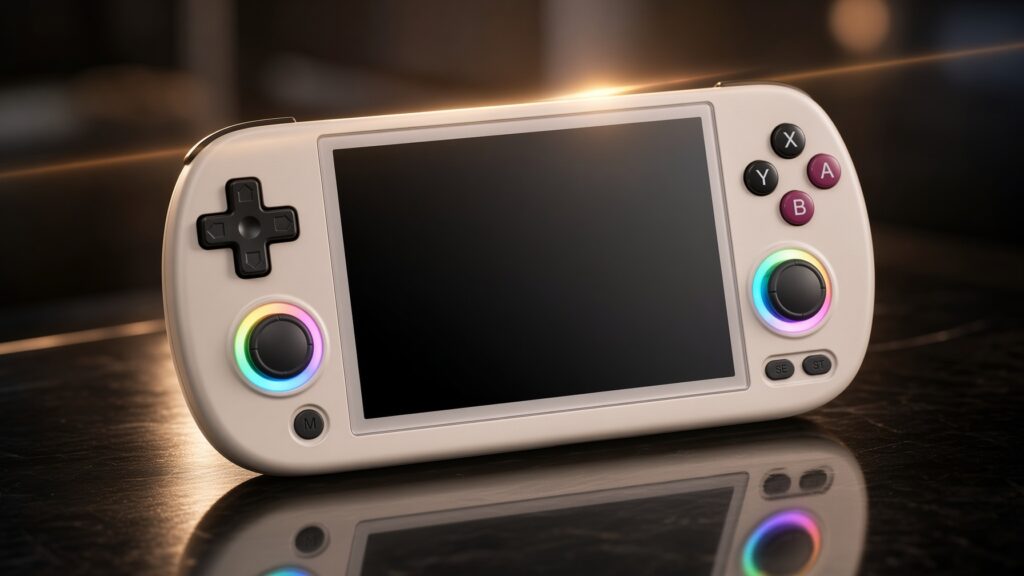
Anbernic RG40XX H Review in 2026 – Is the 4-Inch 4:3 Screen Still Worth It?
By Super Asurada 77 | Retro Joy Lab
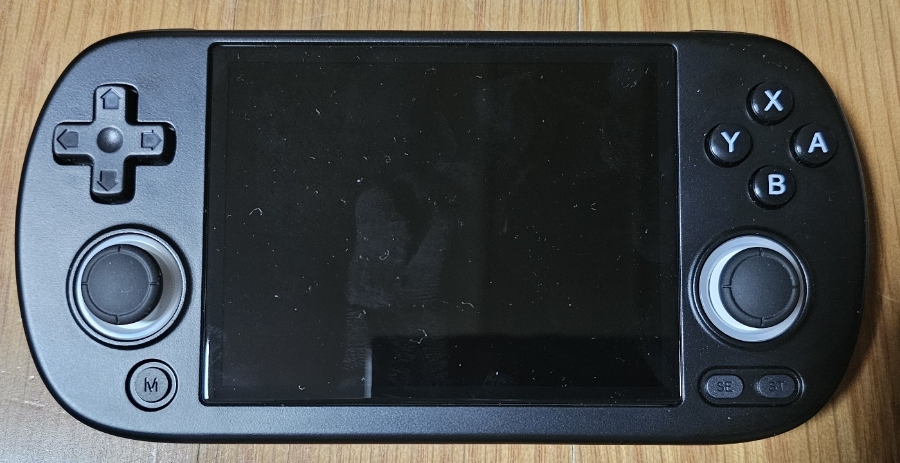
There are dozens of affordable retro handhelds available today, but I keep coming back to one simple question:
How big does a retro handheld really need to be?
The RG35XX H was already one of my favorite lightweight handhelds, but its 3.5-inch screen sometimes felt a little too small during longer gaming sessions.
That is exactly why I became interested in the Anbernic RG40XX H.
It keeps the familiar horizontal design and H700 chipset of the RG35XX series, but increases the display to 4 inches while maintaining a classic 4:3 aspect ratio.
Half an inch may not sound like much.
In actual use, however, the difference is much more noticeable than I expected.
After spending time with both devices, here is what I like about the RG40XX H, what I don’t like, and who I think should actually buy one.
RG40XX H Specifications
Here are the main specifications.
- Display: 4.0-inch IPS, OCA full lamination
- Resolution: 640 × 480
- Aspect ratio: 4:3
- CPU: Allwinner H700, quad-core Cortex-A53 up to 1.5GHz
- GPU: Mali-G31 MP2
- RAM: 1GB
- Operating system: 64-bit Linux
- Storage: Dual microSD card slots
- Wi-Fi: 2.4GHz / 5GHz
- Bluetooth: 4.2
- Battery: 3,200mAh
- Video output: HDMI
- Vibration: Supported
- Charging input: 5V / 1.5A
- Official weight: approximately 208g
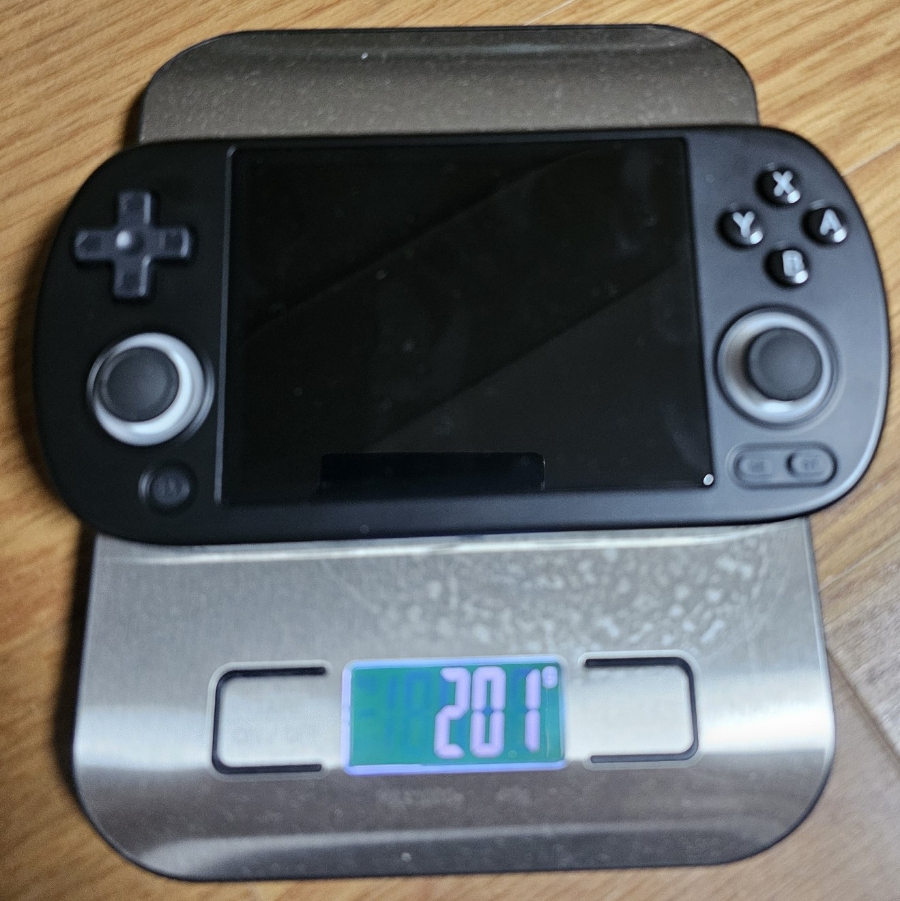
Interestingly, my own unit measured around 201g on my scale.
Either way, it remains light enough that I can comfortably use it for much longer sessions than heavier handhelds such as the Odin series.
The 4-Inch 4:3 Display Is the Main Reason to Buy It
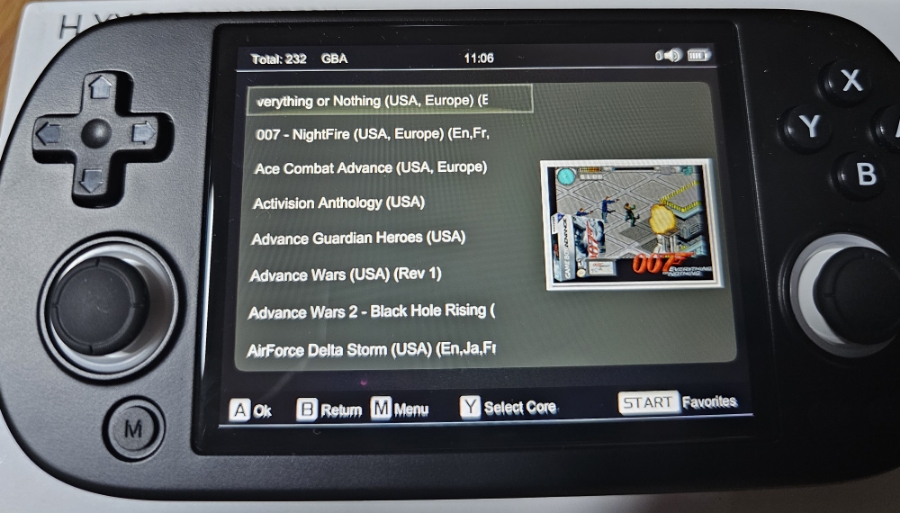
This is easily my favorite part of the RG40XX H.
The screen is only 0.5 inches larger than the 3.5-inch display on the RG35XX H.
On paper, that sounds insignificant.
Put the two handhelds next to each other, though, and the difference becomes obvious.
Text is easier to read.
Sprites feel larger.
Menus are more comfortable to navigate.
And games that originally targeted 4:3 televisions simply look natural on this display.
This is particularly noticeable with systems such as:
- Famicom / NES
- Super Famicom / SNES
- Mega Drive / Genesis
- PC Engine
- Neo Geo
- PlayStation 1
For someone who spends most of their time playing games from the 8-bit, 16-bit and PlayStation eras, 4 inches feels like a sweet spot.
It is noticeably easier on my eyes than a 3.5-inch handheld without making the console dramatically heavier.
RG40XX H vs RG35XX H: The Difference Is Bigger Than It Looks
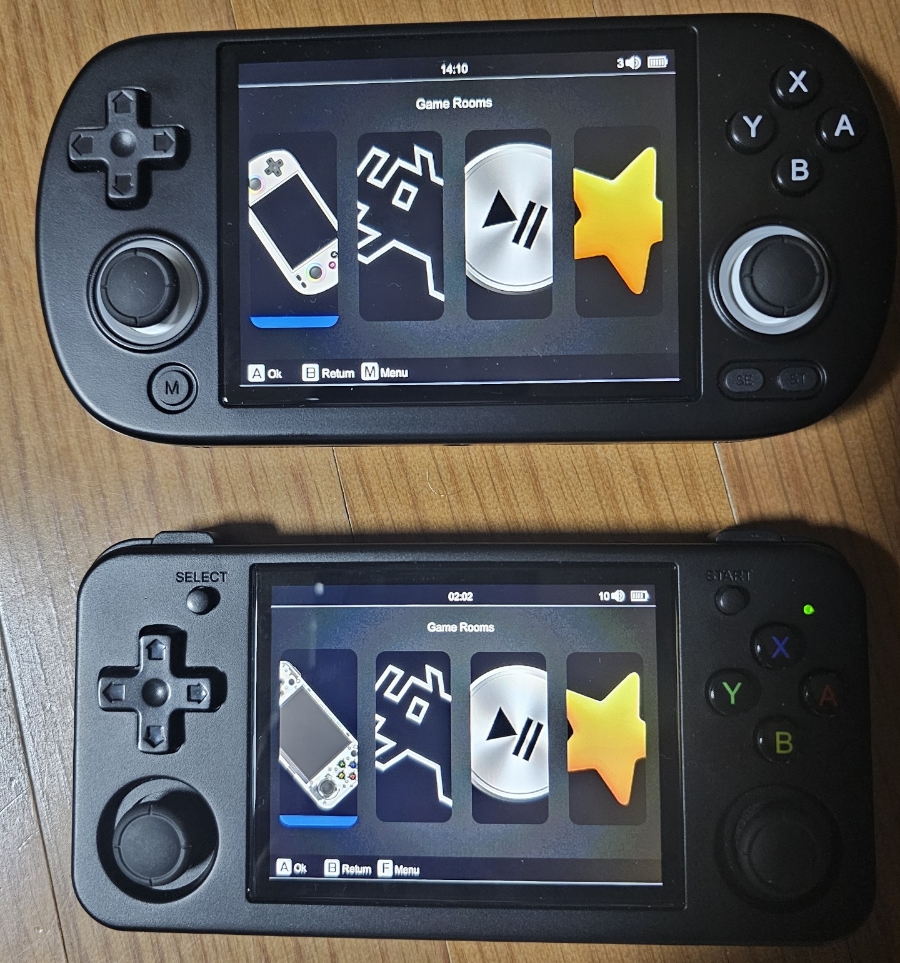
The RG35XX H is still an excellent handheld.
In fact, I still like it because of how small and light it is.
But after switching between the two devices, I found myself preferring the RG40XX H when I knew I would be playing for more than a few minutes.
The RG35XX H weighs around 185g, while the RG40XX H is a little heavier.
You can feel the difference.
But the larger screen gives me a much better trade-off between portability and comfort.
For a short commute or something I want to throw into a small bag, I may still choose the RG35XX H.
For an RPG session, a longer train ride, or gaming at home, I prefer the RG40XX H.
If you already own an RG35XX H, don’t expect a huge performance upgrade.
The real upgrade is the screen size, not processing power.
That distinction is important.
Build Quality and Controls
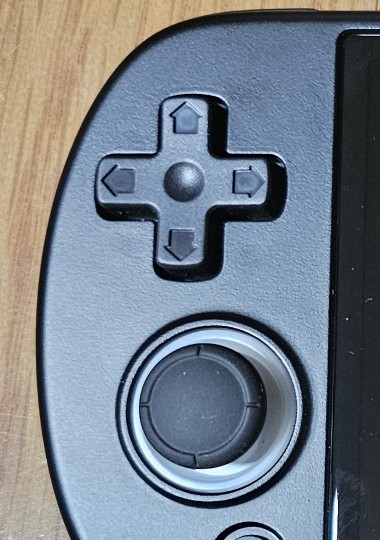
The overall design is familiar if you have used other Anbernic horizontal handhelds.
It feels compact without feeling like a toy.
The D-pad and face buttons are positioned where I expect them to be, and the horizontal layout is much more comfortable for me during longer sessions than many small vertical handhelds.
There is one thing I don’t particularly like.
The Analog Stick Is Very Close to the D-Pad
The left analog stick sits close to the D-pad.
During games that rely heavily on the D-pad, I occasionally notice the analog stick touching or interfering slightly with my thumb movement.
It doesn’t ruin the experience, but I notice it most in platform games where I constantly change directions.
For slower RPGs, strategy games and most PS1 titles, it bothers me much less.
The Power Button Takes Some Getting Used To
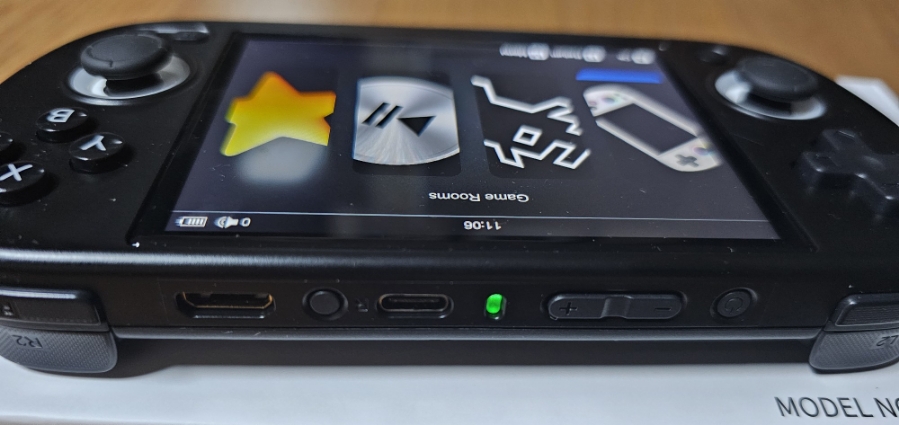
Another small detail is the power button.
When I first used the RG40XX H, the button feedback felt subtle enough that I occasionally wondered whether I had actually pressed it.
After using the console for a while, I became accustomed to it.
I wouldn’t call it a serious problem, but people with larger hands may notice it.
The status indicator is also fairly subtle, which I personally prefer when playing in a dark room.
How Does the RG40XX H Perform?
The H700 isn’t designed to compete with modern Android handhelds.
And that is completely fine.
This is not the device I would buy primarily for GameCube, PlayStation 2 or demanding PSP emulation.
I think its strength is much simpler:
PS1 and older systems.
That is where the RG40XX H makes the most sense.
Famicom, SNES, Mega Drive and Older Systems
These systems are where the handheld feels most at home.
The 640×480 display works extremely well with classic 4:3 games, and the H700 has more than enough performance for most games from these generations.
This is probably where I spend the most time with the device.
PlayStation 1
PS1 is another strong point.
The controls, vibration support and 4:3 display make the RG40XX H particularly enjoyable for PlayStation-era RPGs, action games and strategy titles.
If PS1 is the newest system you really care about, you probably don’t need a much more powerful handheld.
Dreamcast: Playable, but Don’t Buy It for Dreamcast
Dreamcast performance depends heavily on the game.
Some lighter titles can be surprisingly playable.
Others are clearly beyond the ideal performance range of the H700.
For example, in my testing, demanding 3D games such as Dead or Alive 2 showed noticeable slowdown.
So while Dreamcast support is useful as a bonus, I wouldn’t buy the RG40XX H specifically as a Dreamcast handheld.
Think of Dreamcast as:
“Some games work.”
Not:
“This is a Dreamcast machine.”
Nintendo DS Performance
Nintendo DS is an interesting case because the RG40XX H only has one physical screen.
That means you need to switch layouts or display both DS screens within the 4-inch panel.
In my testing with New Super Mario Bros., gameplay was generally smooth.
Higher-resolution settings could create slowdown in certain areas such as the map screen, so I found that more conservative settings provided a more consistent experience.
DS emulation is definitely usable.
But if Nintendo DS is your main system, I would still prefer hardware with a display layout better suited to dual-screen games.
PSP Performance Is Very Game-Dependent
PSP is another system where expectations matter.
3D games can be demanding.
For example, racing games such as Ridge Racer can show frame drops or stuttering depending on settings.
On the other hand, lighter 2D games can run much better.
I had a good experience with titles such as Super Robot Wars A Portable, which is exactly the type of PSP game I would actually play on this handheld.
So I see PSP support as another bonus rather than the main reason to buy the RG40XX H.
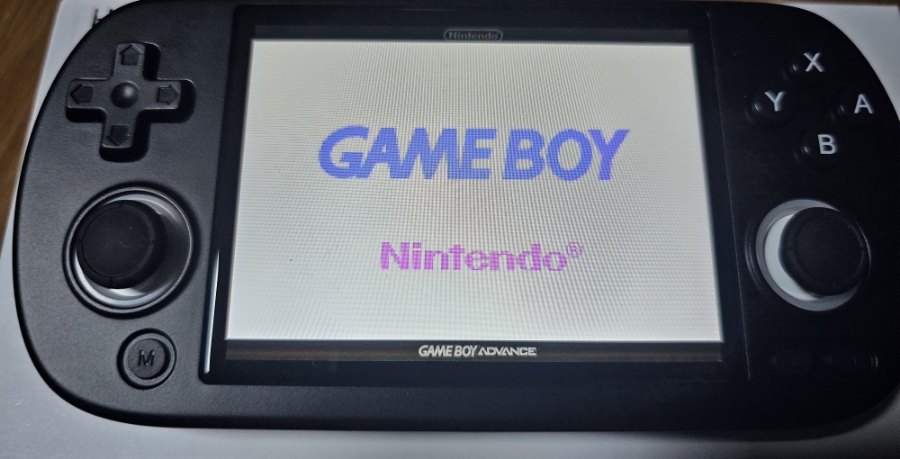
GBA Looks Good, but Remember the Aspect Ratio
Game Boy Advance games use a 3:2 aspect ratio rather than 4:3.
That means they won’t naturally fill the entire RG40XX H display without stretching.
I prefer maintaining the original aspect ratio and using borders instead.
The resulting image is smaller, but the proportions remain correct.
For me, preserving the original look is more important than filling every pixel of the screen.
Battery Life
The RG40XX H uses a 3,200mAh battery.
Anbernic advertises up to around six hours of battery life, although actual runtime naturally depends on screen brightness, Wi-Fi, emulator load and other settings.
For the retro systems I normally play, battery life has been sufficient for commuting and casual gaming sessions.
I rarely play a handheld continuously for six hours anyway.
For my use, comfort and weight matter more than maximum battery capacity.
Charging the RG40XX H
This is one area where I recommend following the manufacturer’s specifications rather than assuming every USB-C charger will behave identically.
Anbernic lists the RG40XX H charging input as:
5V / 1.5A
The console also supports USB-C to USB-C charging.
I recommend checking the specifications printed on your charger and using a good-quality charging adapter and cable that are compatible with the device.
I also avoid leaving small electronics charging unattended for unnecessarily long periods.
There is no reason to make charging more complicated than it needs to be.
Use equipment that matches the manufacturer’s specifications and treat the device like any other lithium-battery-powered electronics.
What I Like About the RG40XX H
After using it, these are the things I appreciate most.
The 4-inch 4:3 screen
This is the biggest reason I prefer it over many 3.5-inch handhelds.
Comfortable weight
It is still light enough for longer gaming sessions.
Excellent match for PS1 and older systems
These systems fit both the hardware performance and the display extremely well.
Horizontal design
For longer sessions, I generally prefer this shape over tiny vertical handhelds.
Dual analog sticks
They are useful for systems that need them and make the device more versatile.
Wi-Fi, Bluetooth and HDMI
These aren’t necessary for everyone, but they add flexibility.
What I Don’t Like
No handheld is perfect.
The main disadvantages for me are:
The performance ceiling is relatively low.
If PSP, Dreamcast, N64 or newer systems are your main priority, you may want something more powerful.
The left analog stick is close to the D-pad.
This occasionally gets in the way during D-pad-heavy games.
It isn’t dramatically smaller than more powerful handhelds.
The RG40XX H is lightweight, but buyers looking for absolute pocketability may still prefer the RG35XX H or an even smaller device.
Existing RG35XX H owners aren’t getting a major performance upgrade.
You’re mainly paying for the larger screen and slightly different ergonomics.
Who Should Buy the RG40XX H?
I think the RG40XX H makes the most sense for someone who:
- Mostly plays PS1 and older consoles
- Likes classic 4:3 games
- Finds 3.5-inch screens a little too small
- Wants something much lighter than a large Android handheld
- Prefers a horizontal design
- Plays RPGs, strategy games and classic arcade titles
- Wants a retro handheld for commuting or short gaming sessions
It is especially appealing if you’re at the stage where raw performance matters less than comfort.
That describes me fairly well.
I own and have used more powerful handhelds.
But there are many days when I don’t want more performance.
I just want to play a classic game comfortably.
And for that, the RG40XX H works extremely well.
Who Should Skip It?
I would look elsewhere if your main priority is:
- GameCube
- PlayStation 2
- Demanding PSP games
- Consistent Dreamcast performance
- High-end N64 emulation
- Modern Android gaming
There are more powerful handhelds for those jobs.
They will normally cost more and weigh more, but they provide significantly more performance.
The RG40XX H is not trying to replace them.
RG40XX H or RG35XX H?
If you already own the RG35XX H and are completely satisfied with its screen size, I don’t think you need to rush out and replace it.
Performance is too similar for that.
But if you’ve ever looked at your RG35XX H and thought:
“I wish this screen were just a little bigger.”
Then the RG40XX H makes a lot more sense.
That’s exactly where I noticed the biggest improvement.
Personally, I think the 4-inch display is much more comfortable for longer sessions while the device remains light enough to carry every day.
For me, that’s the RG40XX H’s real advantage.
Final Thoughts
The Anbernic RG40XX H isn’t exciting because it has a groundbreaking processor.
It doesn’t.
It isn’t exciting because it can emulate every console.
It can’t.
What makes it appealing is the balance.
You get a 4-inch 4:3 display, comfortable horizontal controls, relatively low weight and enough performance for the retro systems that many people actually want to play.
After using both 3.5-inch and 4-inch handhelds, I increasingly prefer the larger screen.
The size difference looks small on a specification sheet.
In my hands, it doesn’t feel small at all.
For PS1, SNES, Mega Drive, PC Engine and other classic systems, the RG40XX H remains one of the more comfortable ways to enjoy retro games without carrying a large handheld.
Sometimes a retro handheld doesn’t need more power.
Sometimes it just needs the right screen, the right weight and the right games.
For me, the RG40XX H gets that balance right.
Enjoy your retro gaming life!
— Super Asurada 77 | Retro Joy Lab
\ Get the latest news /
